Showing posts with label review. Show all posts

Wednesday, May 30, 2018

"Slaughterhouse Five" by Kurt Vonnegut

Slaughterhouse-FiveSlaughterhouse-Five by Kurt Vonnegut
My rating: 5 of 5 stars

Most people think the purpose of science fiction is to explore things that don't exist like laser guns and spaceships. In fact, the best science fiction is a way of exploring our modern world in ways that regular fiction can't. In that sense, "Slaughterhouse Five" is one of the best and most important science fiction novels ever written.

Saturday, April 28, 2018

"Blindsight" by Peter Watts [Review]

Blindsight (Firefall, #1)Blindsight by Peter Watts
My rating: 3 of 5 stars

When I first read this book, I liked it a lot. I also thought I understood it. I had a few nagging questions, but I thought those were easily dismissed in favor of a larger story. I read the book again to clear up those questions, and I was even more confused. I also discovered plot threads that had come up earlier that were never addressed and parts where I thought something had happened that really didn't. I know some people argue this book improves on further reading, but I had the opposite experience. I thought the novel got worse on the second reading.

Sunday, January 14, 2018

"Pirate Cinema" by Cory Doctorow [Review]

Pirate CinemaPirate Cinema by Cory Doctorow
My rating: 3 of 5 stars

If you read the book's description, Pirate Cinema is about the media conglomerates and their abusive approach to copyright infringement. Yet most of the novel is really about how "great" it is to be homeless.

In a near future, Trent McCauley is a teenager in a small British town obsessed with remixing existing films into new movies. When he's caught using films illegally, the punishment is to cut off the Internet in his home for a year. In a world where the Internet is used for everything from medical treatment to supporting his family's only source of income, the loss of web access is a devastating fate. Riddled with guilt, McCauley leaves for London, where he gets involved with an underground community. His frustration with an even more restrictive Internet hacking bill leads him to become an unlikely spokesperson for the movement, and his movies become a powerful form of protest. Will Trent ever reunite with his family? Can Trent stay out of prison? Will he bring freedom back to Great Britain and the world? These and more questions drive the novel, along with his love of an anarchist girl named 26.

Tuesday, September 26, 2017

"On Basilisk Station" by David Weber [Review]

On Basilisk Station (Honor Harrington, #1)On Basilisk Station by David Weber
My rating: 5 of 5 stars

On Basilisk Station is about Honor Harrington, the new commander of a future warship called Fearless. On her first command, Honor discovers her ship has been fitted with an experimental weapon that she's forced to use in wargames which leaves her humiliated. For her failure, she's banished to a supposed backwater post called Basilisk Station where Honor and her crew uncover a conspiracy that threatens her government.

Friday, June 16, 2017

"Deep Dark" by Laura Griffin [Review]

Deep Dark (Tracers, #10)Deep Dark by Laura Griffin
My rating: 3 of 5 stars

This is a difficult novel to review. There were some things that were absolutely awesome, and some other things that were absolutely awful. Together, they add up to a decent novel.

Friday, December 16, 2016

"The Girl Who Played with Fire" by Stieg Larsson [Review]

The Girl Who Played with Fire (Millennium, #2)The Girl Who Played with Fire by Stieg Larsson
My rating: 4 of 5 stars

Investigative journalist Mikael Blomkvist is back, this time in pursuit of a ring of human traffickers who are forcing women into prostitution. An idealistic reporter approaches his magazine "Millennium" with a killer story. He and his girlfriend are planning to release a report on the sex crimes industry in Sweden. Not only will the report detail the horror of these crimes, it will also expose the identities of police officers, judges, and politicians involved. It will also discuss a mysterious figure known only as "Zala" who is the mastermind behind the operation. "Millennium" plans to publish an issue dedicated to it, as well as publish a book that will out the names. But before the book can be published, the authors are brutally murdered, and Salander is accused of the crime. The police are hunting her while Blomkvist tries to find the truth and clear her name.

Sunday, August 28, 2016

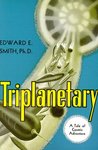
"Triplanetary" by E.E. "Doc" Smith [Review]

Triplanetary (Lensman, #1)Triplanetary by E.E. "Doc" Smith
My rating: 2 of 5 stars

This review is for any modern reader who didn't grow up reading pulp fiction from the 1930s: this probably isn't the story for you. "Triplanetary" is a classic science fiction story, but it doesn't hold up well compared to modern fiction.

I was born in the seventies, so this story is about forty years ahead of my time to begin with, but I'm a big fan of pulp sci-fi. While a lot of it is cheesy and thin compared to works of today, I enjoy the over-the-top action, and lack of concern for scientific accuracy. If they wanted to have green bug-eyed Martians flying around space in hot air balloons, they did it, and didn't think twice about whether they'd be proven wrong. That's kind of refreshing with the hard sci-fi of today. But even compared to pulp fiction of the time, this story is pretty weak.

Sunday, July 24, 2016

"Neuromancer" by William Gibson [Review]

Neuromancer (Sprawl, #1)Neuromancer by William Gibson
My rating: 5 of 5 stars

"Neuromancer" is the classic novel that kickstarted the cyberpunk genre. It didn't invent cyberpunk, but it certainly set the tone for all the novels and movies that followed.

The novel is pretty much what we all thought computers would be like in 2016. Instead of clumsy keyboards and screens, users plug computers directly into their brains. "Neuromancer" tells the story of Case, a hacker who navigates cyberspace, a virtual reality representing all the computer networks of the world. After getting his hacking ability surgically removed by a double-cross, he jumps at the chance to recover his lost ability and pull off a new and dangerous job. But he soon discovers that the people he's working for have a hidden agenda, and he becomes embroiled in a conspiracy involving an ancient and powerful family and an evolving artificial intelligence.

Wednesday, July 13, 2016

Sunday, June 19, 2016

"Fantastic Four" (2015) Somehow Makes Superheroes Boring

Fantastic Four (2015), Source: Fox
Summary: When a group of teenagers enter an alternate dimension, a freak accident grants them superpowers. Bound together by their new abilities, they become a Fantastic Four. But when one of their team plans to destroy the world, they must work together to stop him.

I'd read all the reviews, and seen all the news about the debacle that became Fantastic Four (sorry, that should be Fant4stic, according to the movie poster). I thought it really couldn't be as bad as everyone said. And I was right. Fantastic Four isn't the worst superhero movie ever, despite all the negative press. Superman IV: The Quest for Peace still holds that crown. If anything, Fantastic Four is actually okay up to a point. The problem lies squarely in the middle and end, which is why it's so disappointing. There was plenty of potential to this movie, which makes its wasted resources so frustrating.

Wednesday, June 8, 2016

"Ready Player One" by Ernest Cline [Review]

Ready Player OneReady Player One by Ernest Cline
My rating: 5 of 5 stars

This was an amazing book. It was the kind of book that I was sorry I'd read, because it ended, and I could never again read it for the first time.

I've seen this book described as Willy Wonka meets The Matrix, and that's a fair but simplistic assessment. The novel is about a shy and poor kid named Wade Watts who lives in a near and unpleasant future. The environment has collapsed to the point where gasoline is almost non-existent. He lives in the Stacks, literally a sort of shantytown made of recreational vehicles stacked on top of each other to form makeshift apartment buildings. His only escape is OASIS, a virtual reality where most of the population lives, works, and plays. But when the creator of OASIS died, he revealed that he created a complex scavenger hunt within the game. Whoever can solve the riddles will get his entire fortune as well as control of OASIS. The clues to finding his legacy are related to the world he grew up in, the pop culture world of the nineteen eighties. Wade decides to try to find the creator's fortune, and stumbles onto the solution to the first clue. The book is basically about him and his friends on a virtual treasure hunt while other forces who want the money and control of OASIS pursue him in the real and the virtual world.

Tuesday, May 26, 2015

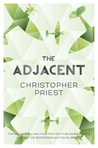
"The Adjacent" by Christopher Priest [Review]

The AdjacentThe Adjacent by Christopher Priest
My rating: 4 of 5 stars

This is a difficult book to review, because I imagine it would be very polarizing. Some people would love it, and some people would hate it. I personally fell on the side of loving it. But I admit, it's unconventional.

"The Adjacent" is one of the most unusual books I've ever read. It's not that the story is confusing. It's not that the story is mysterious. It's not that the story defies definition. It's not that the ending is shocking. It's that the novel is all of these and more. It's more like a series of short stories than an actual novel. However, the stories are all interconnected in terms of sharing common characters and themes. But at the same time, some of the stories place characters in different locations and times, and even contradict each other.

Monday, April 6, 2015

"Dune" by Frank Herbert [Review]

Dune (Dune Chronicles, #1)Dune by Frank Herbert
My rating: 5 of 5 stars

This book is a stunning achievement in world-building. Frank Herbert successfully created an alien world with a complex ecology, a future political system, and even religions with detailed rituals and tradition. But more than that, he took out of that rich world a compelling and brilliant story.

In the distant future, powerful families known as Houses are locked in a complex jostling for power in the galaxy. Most of the conflict revolves around Arrakis, a desert planet that is the source of melange. Melange is a drug essential for extending life, enhancing the mind, and faster-than-light travel. When Paul Atreides and his family become heirs to Arrakis, the rival Baron Harkonnen stages a brutal attack and forces Paul and his mother to flee to the desert. There, they are taken in by a mysterious band of desert dwellers known as the Fremen. Paul learns their ways and ultimately becomes the planet's savior, seeking revenge on the Harkonnen.

That simple summary only scratches the surface of an incredible story rich in detail and complexity. It captures many of the familiar tropes of science fiction space opera, like spaceships, exotic weapons, messianic figures, and rebellion, but puts a unique spin on all of them. More than anything, the world of "Dune" feels completely real. Whole novels could have been written just about the Fremen, the mystical Bene-Jesserit, and the powerful CHOAM Corporation, but these are all treated as background material for the overall story. It's as if Herbert was writing his story for people of his fictional world, not us.

But the brilliance of "Dune" is not that he created such a wonderful world. It's that he's able to tell a great story within it without being boring or showing off. Most authors who create their own worlds can't help spending pages on their background material, essentially saying, "Isn't this cool? Look what I came up with!" Herbert doesn't do that. He only includes the details you need to know to understand the story, and focuses on giving us rich characters and jaw-dropping plot twists. His work is shown by the extensive appendixes in the back of the novel, which aren't necessary to read for the story, but which I found fascinating.

To me, "Dune" is one of the all-time greatest science fiction novels, what the genre should be.

View all my reviews
To hear about my new releases first and get a free book of fifty 100-word short stories, sign up here. Your email will never be shared, and you'll only receive messages about new releases.

Friday, April 3, 2015

"Autumn" by David Moody [Review]

AutumnAutumn by David Moody
My rating: 2 of 5 stars

David Moody is a self-publishing phenomenon. He wrote and published his own bestselling series of zombie fiction in 2001, at a time when the Kindle was just an idea. It all started with this, his first book, Autumn. He gave away copies on his website, and sold the sequels through the growing world of print-on-demand. I admire him as a marketer and a publisher, but not so much as a writer.

Saturday, November 29, 2014

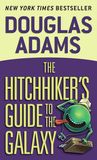
"The Hitchhiker's Guide to the Galaxy" by Douglas Adams [Review]

The Hitchhiker's Guide to the Galaxy (Hitchhiker's Guide to the Galaxy, #1)The Hitchhiker's Guide to the Galaxy by Douglas Adams
My rating: 5 of 5 stars

You know that old question, what book would you take with you if you were trapped on a desert island? Well, my first pick would be a book on survival training. But my second pick would be "The Hitchhiker's Guide to the Galaxy." I know I could spend the rest of my life reading this book, because I've already read it more times than I could count, and I'm never tired of it.

Wednesday, November 26, 2014

"The Girl with the Dragon Tattoo" by Stieg Larsson [Review]

The Girl with the Dragon Tattoo (Millennium, #1)The Girl with the Dragon Tattoo by Stieg Larsson
My rating: 4 of 5 stars

Summary: A disgraced financial journalist takes on an assignment that seems impossible: solve the mystery of a teenage girl who disappeared forty years ago. Along the way, he discovers dark secrets and forms an unlikely friendship with an antisocial female computer hacker.

Saturday, October 4, 2014

"Rendezvous with Rama" by Arthur C. Clarke [Review]

Rendezvous with Rama (Rama, #1)Rendezvous with Rama by Arthur C. Clarke
My rating: 1 of 5 stars

The classic science-fiction novel, Rendezvous with Rama, revolves around a mysterious alien spacecraft (nicknamed "Rama") that enters Earth's Solar System, and the expedition sent to intercept and explore the ship. I must say that, from a technical standpoint, the novel is incredible. Rama is described in detail with a lot of interesting and intricate structures to explore and discover. If someone wanted to imagine what it would be like to stand on a generation ship (i.e. a spaceship designed to support generations of life during centuries-long travel from one solar system to another), this novel is the best I've ever seen.

Friday, July 25, 2014

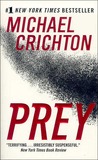
"Prey" by Michael Crichton [Review]

PreyPrey by Michael Crichton
My rating: 1 of 5 stars

Let me start out by saying I'm a huge fan of Michael Crichton. His books Jurassic Park and Andromeda Strain are classics. That said, his other work is hit and miss. He tended to work in a formula which didn't always gel: group of people trapped in a building with something scary. Jurassic Park was a hit. Prey is definitely a miss for me.

Despite claims on the cover and the description, this book is not really about nanotechnology. It's about killer dust. The premise is that a computer programmer discovers his wife has been leading a team to create microscopic robots, and the robots have escaped from the lab and become self-aware. When he goes to his wife's lab, he and the other scientists become trapped inside.

For most of the book, the robots take the form of swarms of dust that attack. Not really a realistic representation of nanotechnology. I would compare it to Verne's book on space travel, a book written about a technology that doesn't exist so is horribly misunderstood.

The killer dust is also really stupid as an enemy. To see a group of adult cowering in fear from piles of dust just didn't do it for me. Sometimes, they do get trapped with it and "Oh no, it's in my eyes! It's in my nose! Okay, I took a shower and I'm fine now."

The opening of the book had some wonderful character development. One of the biggest criticisms Crichton got is his weak characters. I thought he did a great job building a story around the main character, unemployed house husband. Unfortunately, it all gets thrown away once the hero gets locked up in a lab, hiding from the killer dust.

Towards the end, the killer dust becomes more interesting with a nest and pretending to be people, but I wish it had been that way from the start. And I also thought it was all pretty outlandish, nothing like what scientists now believe nanotechnology will become. Some nice moments, but overall a disappointment.

View all my reviews
To hear about my new releases first and get a free short story, sign up here. Your email will never be shared, and you'll only receive messages about new releases.

Friday, June 6, 2014

"The Hunger Games" by Suzanne Collins

The Hunger Games (The Hunger Games, #1)The Hunger Games by Suzanne Collins
My rating: 3 of 5 stars

In a dystopian future, America is now Panem, a nation divided up into divisions that are all oppressed by a central and ruthless government. As punishment for an uprising several decades earlier, the government forces each sector to submit two children - a boy and a girl - and forces them to fight in televised gladiatorial combat. The annual event is known as the Hunger Games.

Related Posts Plugin for WordPress, Blogger...